
Description
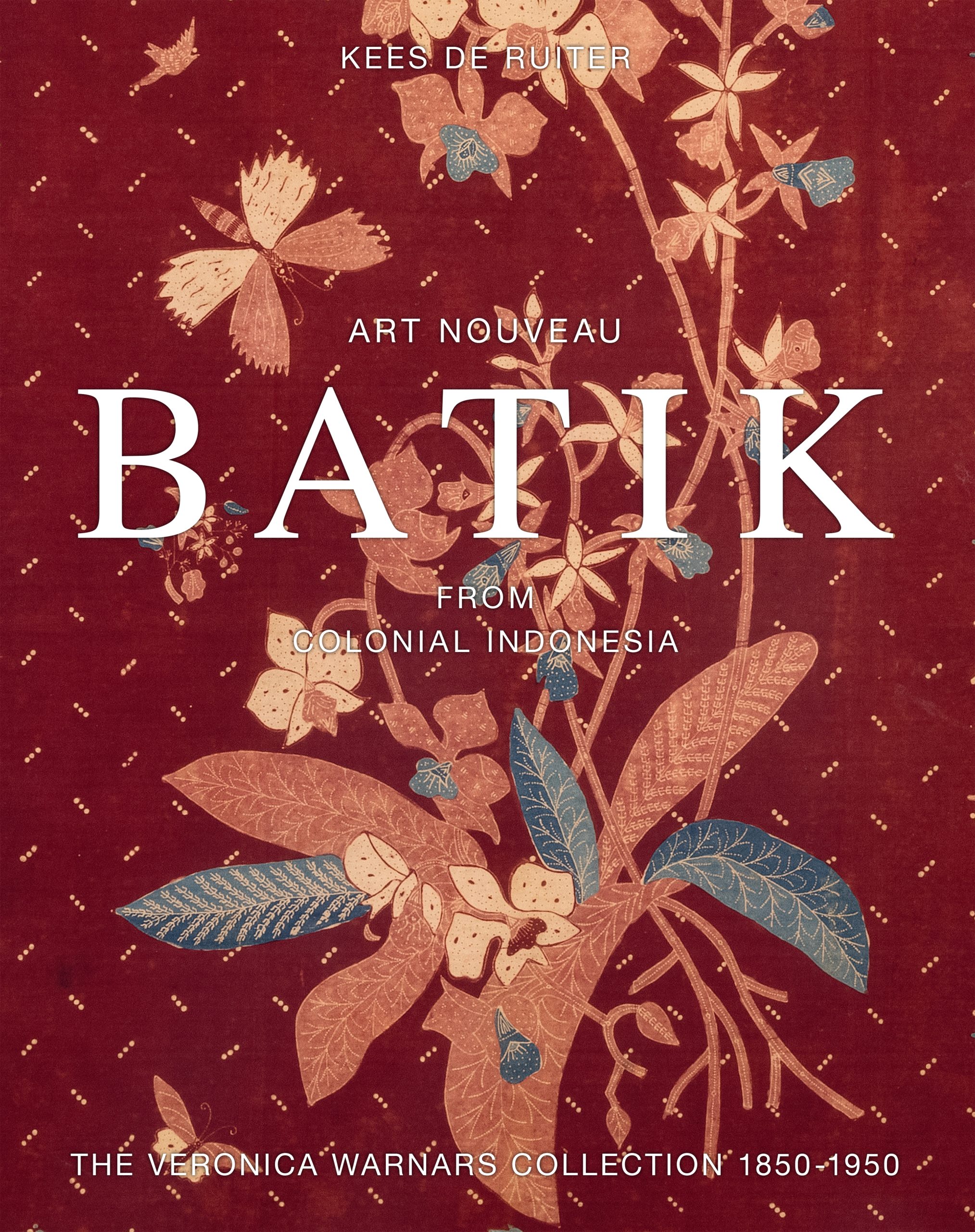
One hundred and forty extraordinary batik textiles from the Veronica Warnars Collection are featured in this book to illustrate the gradual emergence of a late 19th century East-West fusion of European aesthetics and traditional Javanese batik arts. These textiles represent Indo-European and Sino-Indonesian styles and were made for an affluent and very diverse clientele with a Europeanized taste within the hybrid mosaic of colonial society.
Adapting almost effortlessly to the emerging taste of this clientele, the female Indo-European (Eurasian) batik entrepreneurs of Java over time developed designs for their fashionable sarongs that were very much Art Nouveau inspired. This of course followed the rise to prominence of this style in the last decade of the 19th century, not only in Europe, but also in the Americas and Asia.
This book explains clearly about the batik techniques, motifs, patterns and how to date Indo-Dutch (‘Indische’) and Indo Chinese (‘Peranakan’) batik. In this English version of his Dutch book ‘Indo-Europese Batik’ (2023) thirty antique batik skirts are added that were never published before.
About the Author
Kees de Ruiter MA (1965 Maastricht – The Netherlands) studied art history at the University of Amsterdam. At the age of 10 he was given his first antique sarong which had once belonged to his Indo-European great-grandmother. This rare, signed Art Nouveau example, is both a family heirloom, and the inspiration for this collection. He is the fourth generation of his family to collect and explore ‘Batik Pengaruh Eropa’, or European influenced batik, created during the colonial era between 1850 and 1950.